Festival FAQ
The questions everyone asks before the trip, answered from the festival's typical format over the years.
One standing caveat applies to everything below: the National Park Service sets each year's dates, schedule, and rules, so confirm current-year details at nps.gov/brca before you travel.
Tickets, Cost & Access
Is the festival free?
In its typical format, festival programs are free once you're inside the park — you pay only the standard park entrance fee (a private-vehicle pass valid for seven days, or an America the Beautiful annual pass). Nothing extra has typically been charged for the telescope fields, talks, or ranger programs.
Do I need tickets or reservations?
Typically no tickets for the headline events — the telescope viewing fields are open to all comers. Capped programs like ranger constellation tours may use sign-ups or first-come limits and fill fast; check that year's rules on the official schedule, and see our festival guide for what fills up.
When exactly is the festival?
Each June, timed near the new moon for the darkest possible skies. We intentionally don't publish specific dates here — the NPS announces them at nps.gov/brca, and that's the only source you should book travel against.
Can I bring my own telescope?
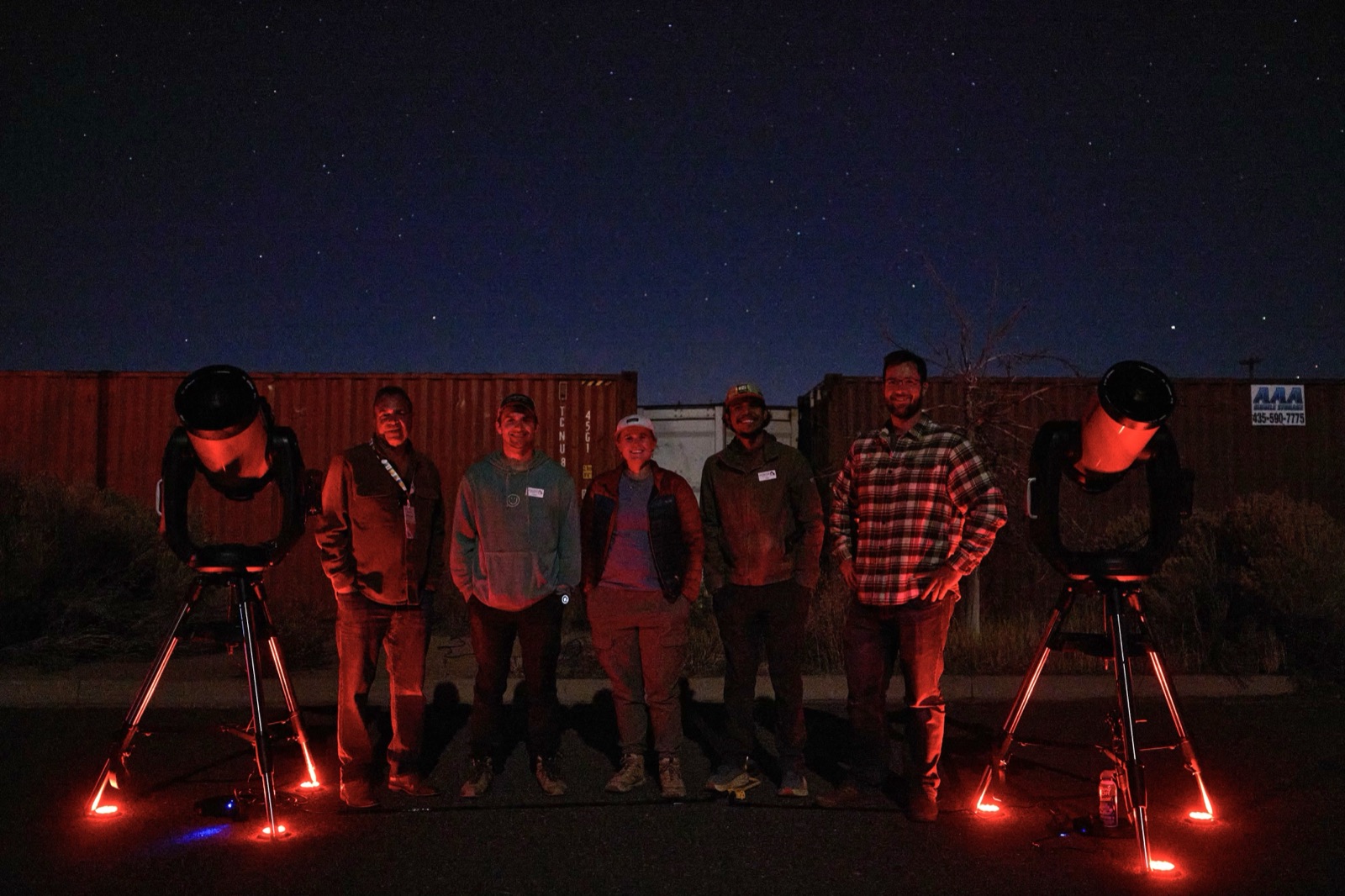
Generally yes — the festival draws plenty of amateur astronomers with their own gear, and binoculars are always welcome. If you set up near the public fields, follow volunteer and ranger direction and use red lights only. Confirm any current-year equipment guidance on the official site.
Families & Kids
Is it good for kids?
Exceptionally. Junior ranger astronomy activities, solar viewing, and patient volunteers at the eyepiece make it one of the best family astronomy events anywhere. The challenge is logistics — cold nights and late hours — and our festival with kids guide covers the schedule that makes it work.
How cold does it get at night?
Cold for June: typically 35–45°F (2–7°C) after dark at 8,000+ feet, even following a warm day. Insulated jacket, warm hat, gloves, long pants. Full packing details in planning your visit.
The Sky & the Night
What if it's cloudy?
Daytime programs and indoor talks typically go ahead; telescope viewing depends on the sky. June is among Bryce Canyon's drier months, but mountain weather moves fast. The best insurance is planning more than one night under the sky.
Do I need to know anything about astronomy?
No. The whole event is built for beginners. Every telescope comes with a human who's excited to explain what you're looking at, and constellation tours assume zero prior knowledge.
Will I see the Milky Way?
On any clear festival night, yes — plainly, with the naked eye. The festival's new-moon timing plus June's well-placed galactic core makes this one of the best Milky Way windows of the year. Beyond the festival explains why, and how to use the off-nights too.
What time does it actually get dark?
Late — this catches people out. Around the June solstice, sunset comes near 9 p.m. and true astronomical darkness, when the Milky Way fully appears, arrives closer to 10:30 p.m. The best viewing runs from then past midnight, which is why naps and late dinners are core festival strategy.
Can I use my phone or flashlight on the telescope fields?
Red light only. White light — including phone screens — wrecks night vision for everyone around you for 20+ minutes. Bring a red-mode headlamp, dim and pocket the phone, and you'll be everyone's favorite neighbor in the dark.
Planning & Logistics
Where should I stay?
Bryce Canyon City at the entrance, Tropic 15 minutes east, or Panguitch 25–30 minutes northwest — plus in-park camping. Everything fills months ahead for festival week. Book the moment you commit to the trip.
How do I get there?
Drive: about 4 hours from Las Vegas, 4.5 from Salt Lake City, 2.5 from St. George, all ending on Scenic Byway 12. Routes, fuel stops, and festival-week parking strategy are in getting there.
What should I bring to a festival night?
Warm layers (insulated jacket, hat, gloves), a red-light headlamp, water and snacks, and a camp chair or blanket for talks and constellation tours. Screenshot the schedule before you arrive — cell service is unreliable. Binoculars are a great addition; your own telescope is optional since dozens are shared on the field.
Is the festival the same thing as a guided stargazing tour?
No — and the difference is worth understanding. The festival is a free public NPS event: big energy, big crowds, shared telescopes. A private guided tour with Bryce Canyon Stargazing (an independent operator, not affiliated with the NPS) is the small-group version: dedicated telescopes, flexible timing, unhurried questions. Many visitors do both in one trip.
One Question We Can Answer Definitively
Want a night under these skies without the crowds? Book a small-group guided tour with Bryce Canyon Stargazing for a festival-week night.
Book a Guided Tour