Beyond the Festival: Peak Milky Way Season
The sky doesn't know it's a festival. The same conditions hold every clear night that week — use them.
The Open Secret of Festival Week
Here's the open secret of festival week: the sky doesn't know it's a festival. The same conditions that make the Bryce Canyon Astronomy Festival spectacular — a June new moon over an International Dark Sky Park at 8,000 feet — hold for every clear night that week, festival programming or not. If you're already making the trip, the smartest thing you can do is claim one of those other nights for yourself.
Why June Is Peak Milky Way Season
The Milky Way's galactic core — the bright, dense, photogenic heart of our galaxy — is a seasonal object. Through late spring and summer in the northern hemisphere, it rises in the southeast in the evening hours and arcs across the sky through the night. By June, the core is well placed by late evening, which means you see the showpiece of the night sky at a civilized hour instead of waiting until 3 a.m. as you would in early spring.
Layer the festival's timing on top of that. The NPS schedules the event near the new moon, so there's no moonlight washing out the faint band of the galaxy. Add Bryce Canyon's altitude (thinner, drier air), its distance from any major city, and its certified dark skies, and festival week is realistically one of the five or so best windows of the entire year to see the Milky Way from anywhere in the continental United States.
"You didn't just book a festival trip. You accidentally booked a peak Milky Way trip. Use it."
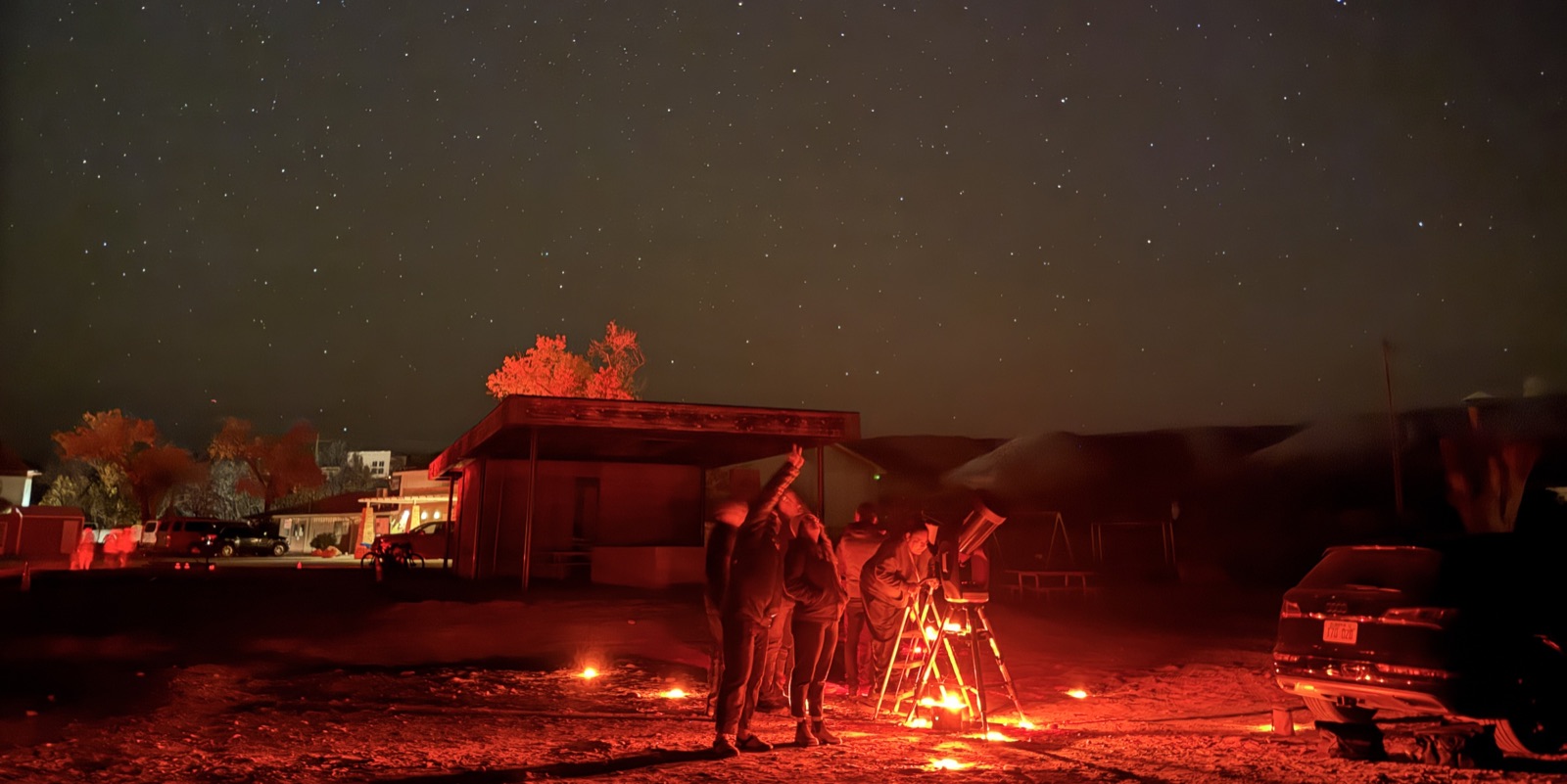
The Festival Night vs. the Guided Night
The festival's public telescope fields are a fantastic, generous, high-energy experience — and they have the trade-offs of any popular free event, as our festival guide covers honestly: lines at the best telescopes, capped ranger programs, fixed schedules, and a crowd. A private guided tour on a non-festival night is the same sky with the opposite dynamics.
Instead of sharing a telescope field with hundreds of people, you're out with a small group — or just your own party. Questions get answered in full sentences, not over a queue.
The telescope is pointed for you, all night. Want five more minutes on Saturn? Take them. Want to compare a globular cluster to a galaxy back-to-back? That's the whole point.
Festival programs run on the festival's clock. A guided tour runs on the sky's clock — timed to true darkness, to the Milky Way core rising, and to your group's pace, with no program cutoff.
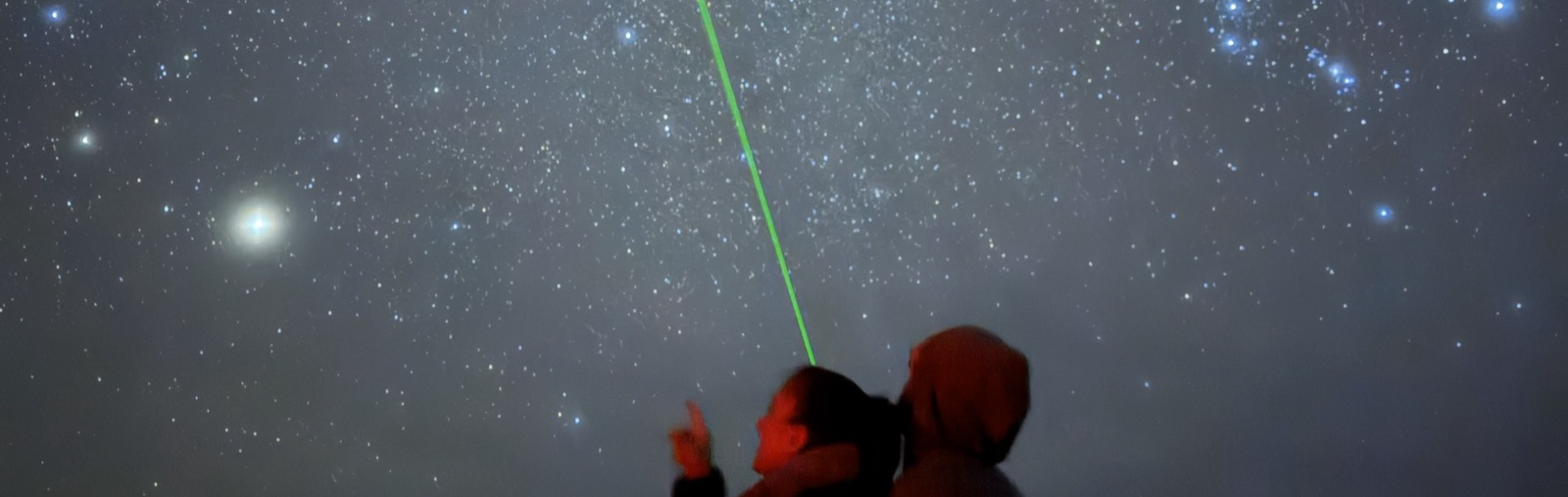
A guide also brings something the self-serve telescope line can't: a through-line. Over a guided night the sky becomes a connected story — how to find your way between constellations, what you're actually looking at and how far away it is, why this sky looks nothing like the one at home. People walk away from the festival impressed. They walk away from a guided night knowing things.
A Word on Milky Way Photography
If you're bringing a camera, festival week hands you near-ideal conditions: a new moon, dry June air, and dramatic hoodoo silhouettes for your foreground. The basics travel well — a tripod is non-negotiable, a wide lens helps, and a starting exposure in the neighborhood of 15–20 seconds at a high ISO with the aperture wide open will show you the galactic core on the first frame. From there it's refinement, not luck.
Two festival-specific cautions. First, the public telescope fields are the wrong place to shoot: your screen and any focus-assist light will earn you justified glares, and tripod legs in a dark crowd are an ankle hazard. Walk to a quieter viewpoint instead. Second, mind the rim at night — stay behind fencing and well back from edges, because the drop-offs that photograph so beautifully do not forgive a backward step in the dark. Guides on a private tour can also point you to compositions and time your shots to the core's position, which is the fastest shortcut to a frame worth printing.
How to Combine Them
The combination most repeat visitors land on:
- One big festival night for the energy — the telescope fields, a speaker talk, a ranger constellation tour if you can get in. (With kids, this is the night to spend their energy budget; see the family guide.)
- One guided night with Bryce Canyon Stargazing the evening before or after, when the same new-moon sky is overhead but the crowds aren't.
- Daytimes for the hoodoos — because Bryce Canyon between sunrise and sunset is also one of the great landscapes on Earth, and you'll want the contrast.
Because guided tours during festival week sell out alongside the hotels, book the tour at the same time you book your lodging — our planning guide has the full timeline. And if clouds steal one of your nights (June is dry, but mountains make their own weather), having two sky nights on the calendar is the best insurance there is.
Claim Your Quiet Night Under the Milky Way
Small groups, dedicated telescopes, and a guide who knows this sky — on the darkest nights of the year. Festival-week dates are limited.
Book with Bryce Canyon StargazingKeep Reading
- Festival Guide — what the public festival nights are like
- Getting There — routes and festival-week parking
- Festival FAQ — quick answers before you book